History of the AR-15: From Military Origins to Iconic Rifle
Discover how the AR-15 evolved from a military concept into one of the most recognisable rifles in the world, shaping modern firearm design and culture.
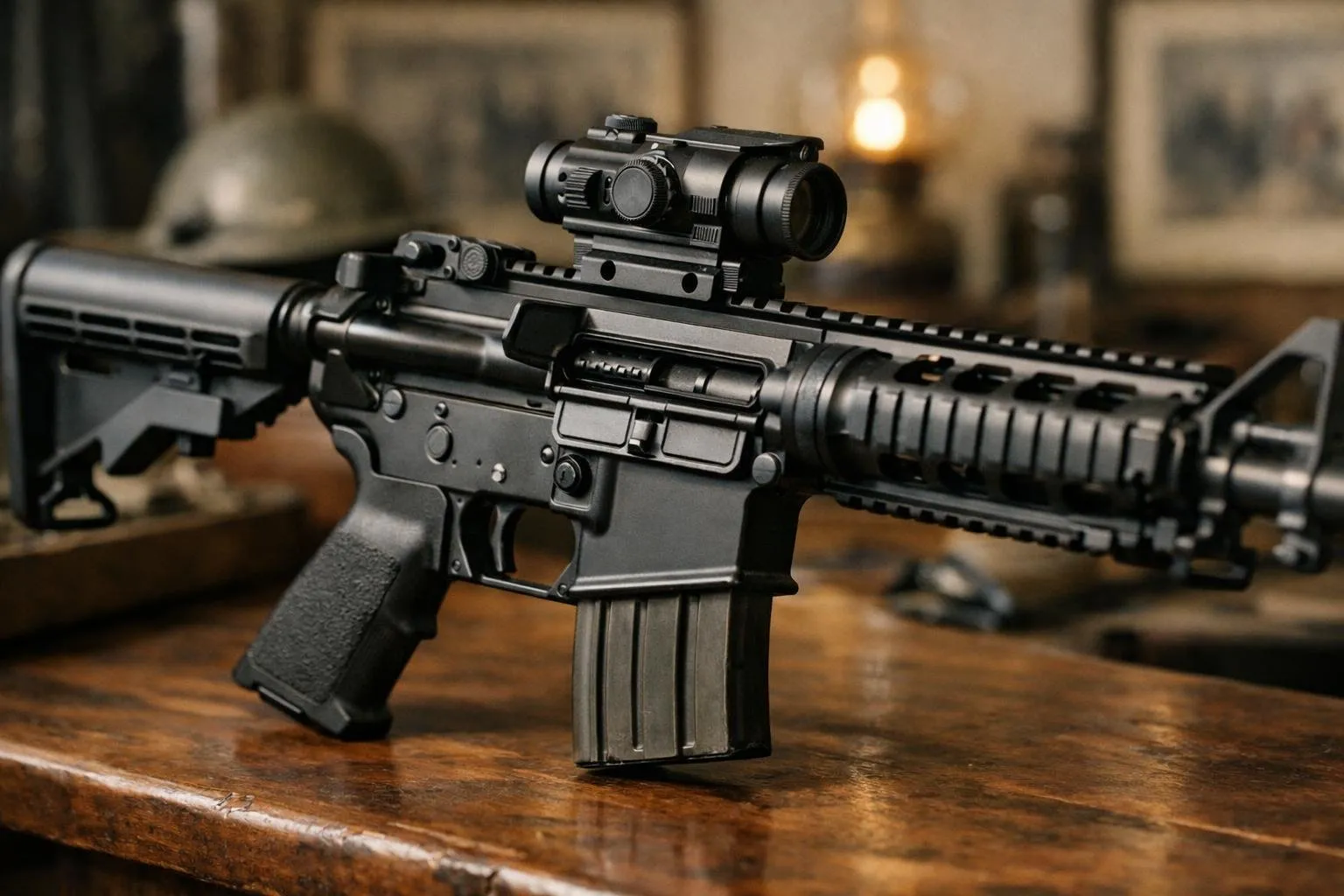
History of the AR-15: From Military Origins to Iconic Rifle
The AR-15 stands as one of the most recognizable rifles out there, but honestly, most people don't really know how it got here or why it matters so much. Its story starts back in the late 1950s, when Eugene Stoner, an engineer at ArmaLite, set out to create a lightweight, modular rifle that would shake up both military and civilian firearms.
It began as a combat prototype and ended up spawning a platform with endless variations across the U.S. these days.
If you want to understand the arguments about the AR-15, you really have to look at how it got here. The rifle moved from military trials to civilian shelves, and now the National Rifle Association even calls it "America's Rifle"—all thanks to its customizability and ease of use.
Its development kind of mirrors bigger shifts in technology and American culture over the past sixty years.
Key Takeaways
- Eugene Stoner created the AR-15 in the late 1950s, building a lightweight, gas-operated rifle with a rotating bolt.
- After the military picked it up as the M16, Colt started selling civilian versions, and people loved them for how easy they were to customize.
- The AR-15's journey from military weapon to civilian favorite put it right in the middle of debates about gun rights and regulations.
The Origins of the AR-15
The AR-15 came out of a tiny California company’s effort to make lighter military rifles in the 1950s. Eugene Stoner designed it as a smaller version of the AR-10, and he ended up shaking up gun design for decades.
Background of ArmaLite and Early Prototypes
ArmaLite started in 1954 as part of Fairchild Engine and Airplane Corporation. They ran things out of a modest spot in Hollywood, California, and chased after military contracts by building innovative firearms.
“AR” actually means ArmaLite Rifle—not “assault rifle,” like some folks think. ArmaLite liked to experiment, using oddball materials and designs that most gun makers wouldn’t touch.
Back in the 1950s, they built a bunch of prototypes hoping to catch the military’s eye. They used aluminum alloys and fiberglass-reinforced plastics, which was pretty wild for gunmaking at the time. That aviation background really showed—they weren’t afraid to break the rules.
Eugene Stoner and the ArmaLite Team
Eugene Stoner grew up in Indiana and later moved to Long Beach, California. He worked as a machinist before landing at ArmaLite as chief engineer in 1954.
Stoner didn’t have a formal engineering degree, but he brought a hands-on approach from his aviation and machine shop days. He wanted to cut weight without sacrificing reliability.
His team was tiny but full of fresh ideas. Stoner worked with a few designers who really got his vision for what a modern military rifle could be. They pushed back against the old-school thinking about weight and function.
Development of the AR-10 and AR-15
Stoner’s first big project at ArmaLite was the AR-10. That rifle paved the way for the AR-15, setting up the core operating system and look.
He developed the AR-10 in the mid-1950s to fire the 7.62×51mm NATO round. It had an aluminum receiver and weighed a lot less than the competition. The AR-10 didn’t win the military contract—M14 did in 1957—but it set the stage.
After that letdown, Stoner and his team went back to the drawing board and built the AR-15 as a lighter, smaller rifle. The AR-15 fired a smaller .223 Remington cartridge (later 5.56×45mm NATO), which made it easier for soldiers to carry more ammo. That shift matched the military’s growing interest in lighter, high-velocity rounds.
Design Innovations and Technology
The AR-15 brought a bunch of new ideas to gun design. Stoner’s direct impingement gas system used propellant gases to cycle the action, which was pretty clever.
Some of the coolest innovations:
- Modular construction—super easy to take apart and fix
- Aluminum receivers—kept the weight down
- Synthetic stocks and grips instead of old-school wood
- In-line stock design to cut down on recoil and muzzle rise
- Rotating bolt system for reliable cycling
The rifle’s light build let soldiers haul more ammo without feeling weighed down. By lining up the barrel with your shoulder, it gave you better control, especially during rapid fire. This was a big leap from stuff like the M1 Garand or M14.
Stoner’s core design earned U.S. Patent 2,951,424 and set the blueprint for tons of later models. That modularity—being able to swap out parts—kept the AR-15 relevant for decades.
Adoption by the Military and the Evolution to the M16
The AR-15’s path from private project to standard-issue military rifle was anything but smooth. Stoner’s light rifle ran into a wall of old-school thinking from folks who loved the .30 cal, but real-world combat and field trials eventually tipped the scales.
Initial Military Trials and Feedback
The Army’s Ordnance folks pushed back hard against the AR-15, mostly because they didn’t like weapons made outside their own shops. In 1958, the Army’s Combat Developments Experimentation Command put the AR-15, M14, and Winchester’s Light Weight Military Rifle through their paces with squad trials.
The tests gave the AR-15 a thumbs-up, but old habits die hard, and the Army dragged its feet. General Maxwell Taylor shot down the AR-15 in favor of the M14, so ArmaLite sold the rights to Colt. Colt saw the potential and chased military contracts anyway.
General Curtis LeMay from the Air Force took notice after seeing what the AR-15 could do. The USAF became the first branch to make it standard, opening the door for wider military use.
From M14 to M16: Key Decisions
The military officially adopted the AR-15 as the M16 in 1964 after more trials. Colt landed the contracts and retooled their factories for military production. Defense Secretary Robert McNamara and Deputy Secretary Cyrus Vance pushed for the switch from the heavier M14 to the lighter 5.56mm rifle.
The M16 scored high for its weight, accuracy, and rate of fire compared to older rifles. Carrying more ammo became possible, which meant more sustained firepower for troops.
The 1965 Small Arms Weapons System test sealed the deal. It showed the AR-15/M16 was the best choice and that a 5.56mm machine gun had a lot of promise. Squads tried out all sorts of setups, even some Soviet gear, to see what worked best.
Vietnam War Impact and Performance
The M16’s debut in Vietnam was rough. Soldiers complained about jams and failures, especially against opponents using the famously reliable AK-47. The switch from wood and steel to aluminum and plastic just felt weird for a lot of guys.
Early M16s didn’t have chrome-lined chambers and used the wrong gunpowder, which led to jams in Vietnam’s brutal conditions. Troops lost faith when their rifles failed in the middle of firefights. Stoner’s design wasn’t really the problem—cost-cutting and poor training were.
Congress got involved and demanded fixes right away. The military handed out cleaning kits and updated training. Once people figured out the right ammo and maintenance, the 5.56mm round actually worked well at typical combat ranges.
Subsequent Improvements: M16A1 and Beyond
The M16A1 fixed a lot of the Vietnam-era issues. Engineers added a chrome-lined chamber and bore to fight corrosion and fouling. They put on a forward assist so you could manually chamber rounds if things got sticky.
A new closed flash suppressor replaced the old three-pronged one that snagged on brush. The military also standardized the right gunpowder, which solved a lot of cycling problems. Honestly, these changes made the M16 a much more reliable weapon.
Notable M16A1 improvements:
- Chrome-lined chamber and bore
- Forward assist
- Better flash suppressor
- Correct propellant in ammo
- Improved cleaning kits and training
The M16 ended up being the longest-serving rifle in U.S. military history. It kept evolving, but Stoner’s basic design stuck around. Later, Springfield Armory and other companies made their own versions alongside Colt.
Transition to the Civilian Market
The AR-15 started moving from military use to civilian hands in 1959, when ArmaLite sold the design rights to Colt. Colt then rolled out semi-automatic versions for the commercial market throughout the 1960s.
This change turned the AR-15 into a favorite among American gun owners, hunters, and shooting sports fans. The rifle's design and reputation really helped it take off outside the military.
Colt's Acquisition and Commercial Strategy
Colt's Manufacturing Company bought the AR-15 design from ArmaLite in 1959, seeing its potential beyond just military contracts. Colt locked in military contracts for the M16, but at the same time, they crafted a plan to sell semi-automatic AR-15s to civilians.
The timing couldn't have been better. Suddenly, regular folks could buy a rifle that looked and felt like a military weapon but worked differently.
Colt highlighted the AR-15's lightweight build, accuracy, and modular design. They pitched these features to a broad range of buyers, from weekend shooters to folks looking for home defense options.
This move helped set the Colt AR-15 apart from its military sibling. It was a smart play, honestly.
Introduction of Semi-Automatic Models
The big difference between military and civilian AR-15s is in how they fire. Civilian models are semi-automatic—you get one shot per trigger pull, not a stream of bullets like the military's fully automatic versions.
By the 1960s, manufacturers were making semi-automatic AR-15s for civilians. These rifles kept the AR-15's look and feel but followed the law.
The semi-auto AR-15 had a lot going for it:
- Reduced recoil compared to old-school hunting rifles
- Customisable parts like barrels, stocks, and sights
- Chambered in .223/5.56mm, so you could use it for lots of things
- Lightweight, easy to carry and handle
Growth Among Hunters and Shooting Sports
Hunters liked the AR-15 for its flexibility and the way you could swap out parts. If you wanted to hunt different game, you just changed the barrel or calibre.
Shooting sports fans really took to the AR-15. Competition shooters, target plinkers, and tactical course junkies all found it accurate and easy to tweak for their needs.
The modular design let you set up your rifle for a specific competition or style of shooting without buying a whole new gun. That’s a big deal if you’re on a budget or just love tinkering.
Hunters also liked that the rifle was lighter than most, especially on long hunts. Swapping optics and accessories made it fit all kinds of hunting, from varmints to bigger game (if your local laws allowed).
Influence of Media and Pop Culture
The AR-15 started popping up everywhere—in movies, TV shows, and gun magazines. American gun culture latched onto its distinctive look.
Magazines and enthusiast websites ran endless articles about custom builds, upgrades, and performance reviews. If you were a gun owner, you couldn't miss the AR-15 hype.
Its military roots made it even more appealing to some buyers. There’s just something about owning a civilian version of a rifle used by soldiers, even if it works differently.
Design Features and Modularity
The AR-15 stands out for its interchangeable parts and flexible setup. You can change calibres, barrel lengths, and add accessories—covering everything from varmint hunting to target shooting.
Modular Platform and Aftermarket Parts
The AR-15's modular design uses a two-part receiver system, splitting the upper and lower assemblies. Swapping uppers is simple, and you don’t need a gunsmith or special tools.
This design kicked off a giant aftermarket industry. There are thousands of parts—stocks, grips, triggers, sights—you name it.
Detachable magazines of all sizes fit into the lower receiver, while the upper holds the barrel and bolt. The platform’s huge popularity comes from this ability to customise without buying a whole new rifle.
It saves money and lets you set up your AR-15 for competition, home defense, or just plinking at the range. That flexibility is hard to beat.
Calibres and Barrel Length
Most AR-15s use .223 Remington or 5.56mm NATO, but you can switch calibres by changing the upper receiver. Want 9mm, .300 Blackout, 6.8mm SPC, or even .22 LR? No problem.
Barrel lengths go from short pistol types (about 40cm) to long rifle versions (up to 60cm). Shorter barrels are handy in tight spaces, while longer ones help with accuracy for hunting or long-range shooting.
The Colt AR-15 Sporter gave civilians a 50cm barrel as standard. Your barrel choice affects how the gun shoots—and what’s legal in your area. Magazines usually hold 10 to 30 rounds, but that depends on local laws.
Upper Receiver and Handguard Innovations
Modern uppers come with Picatinny rails, so you can slap on optics, lasers, or bipods without drilling or permanent changes. Free-floating handguards replaced old styles, which helps keep your shots more accurate by not pressing on the barrel.
There’s a bunch of handguard choices: KeyMod, M-LOK, or classic quad-rail. These let you mount lights, grips, and other gear wherever you want. Aluminium keeps things light but strong.
Current handguard designs also have vents to help cool things down during long shooting sessions. The AR-15 has really evolved from its military beginnings into something shooters can make their own.
Legal, Political, and Societal Impact
The AR-15 has shaped American gun policy for decades, sparking fierce debates and court fights. It’s at the center of gun control arguments, especially after the 1994 federal assault weapons ban and its use in high-profile mass shootings.
Gun Control Debates and Legislation
The AR-15 entered gun control debates in the early '90s, as violent crime spiked. Lawmakers zeroed in on semi-auto rifles that looked like military guns.
The Brady Bill passed in 1993, bringing in background checks for all handgun sales by licensed dealers. It was the first big federal gun law in decades and made dealers run criminal background checks before selling a gun.
Gun rights groups fought back, saying these laws hurt Second Amendment rights but didn’t stop criminals. The NRA rallied its members hard against new restrictions all through the '90s.
States went in all directions. Some banned features like folding stocks or bayonet mounts. Others made you register or get a permit for semi-auto rifles.
Federal Assault Weapons Ban and Aftermath
Congress passed the federal assault weapons ban in 1994 as part of a bigger crime bill. It banned making or selling certain semi-auto rifles, including AR-15s with specific features. Magazines over 10 rounds were also out.
The ban had a built-in expiration and ended in 2004. During the ban, manufacturers found ways around it by making compliant rifles that looked different but worked the same.
After the ban, a few things happened:
- AR-15 sales and popularity shot up
- Semi-auto rifles became more accepted in mainstream culture
- The industry pushed hard to market AR-15s to civilians
- Political fights over gun rights got even more heated
When the ban expired, AR-15 production and sales exploded. It became a go-to firearm for a lot of Americans.
Role in Mass Shootings
The AR-15 has shown up in several mass shootings that made headlines. In 2012, the Sandy Hook Elementary tragedy killed 20 kids and six adults, with the shooter using an AR-15-style rifle.
Other attacks followed. Shooters picked AR-15s for their reliability, ease of use, and availability. Each incident added fuel to the push for tougher gun laws.
Survivors and families of victims started advocating for gun control, pushing for new assault weapon bans and universal background checks. But Congress kept stalling, even as public support for some restrictions grew.
Organisations, Advocacy, and Public Perception
The NRA started calling the AR-15 "America's rifle", hoping to change how people saw it. The National Shooting Sports Foundation also promoted it for sport shooting and home defense, highlighting its popularity among law-abiding owners.
Gun control groups pushed back, pointing to the AR-15’s role in mass shootings and questioning why civilians needed military-style rifles. Groups started by Sandy Hook families became leading voices for gun reform.
The political divide only grew. The AR-15 turned into a symbol of the bigger fight over gun rights, freedom, and safety. Democratic-led states passed new restrictions, while Republican states doubled down on protecting access.
Continued Innovation and the AR-15 Today
The AR-15 keeps evolving, thanks to new manufacturing tech, better materials, and growing use by militaries and civilians worldwide. Modern AR-15s pack in high-tech features, and the platform’s modularity lets shooters customise for sport or defense like never before.
Advancements in Materials and Manufacturing
Today’s AR-15s are built with precision that Eugene Stoner probably never dreamed of. Computer-controlled (CNC) machines cut receivers and parts down to thousandths of an inch, making rifles more accurate and reliable.
Manufacturers now use materials way beyond just aluminium and steel. Carbon fibre handguards shave off weight and handle heat better. Titanium parts are tough but light. Nickel boron coatings make cleaning easier and resist rust better than old-school finishes.
Some of the latest material upgrades:
- Polymer – Reinforced nylon for stocks and magazines
- Titanium – Used for firing pins, gas blocks, and small bits
- Carbon Fibre – Handguards and buttstocks
- Cerakote – A ceramic finish that comes in loads of colours
Companies like Moriarti Armaments even sell complete kits so you can build your own AR-15 with all these modern parts.
Global Influence and Derived Models
The AR-15's influence stretches way beyond the U.S. Military forces around the world have built rifles off Stoner's original design, tweaking them for their own needs.
The HK416—Heckler & Koch's take on the platform—ditched the direct impingement gas system for a short-stroke piston. That change cuts down on receiver fouling and bumps up reliability when things get ugly. Special forces in Germany, France, and Norway have all picked up the HK416.
The British L119A2 and the Canadian C8 also stand out. Both stick to the AR-15's basic structure but layer on improvements from years of real-world combat. The platform's adaptability lets firearm makers build mission-specific rifles while keeping the controls and feel familiar.
Community, Customisation, and Future Prospects
The modern sporting rifle scene thrives on customisation. You can swap calibres, barrel lengths, triggers, and just about any accessory to dial in a rifle that fits you. There are an estimated 20 million AR-15s in civilian hands across the U.S. now—pretty wild, honestly.
The AR-15 platform takes everything from .22 Long Rifle up to .50 Beowulf. That kind of versatility means it's at home in target shooting, hunting, or even competition. Online, communities buzz with folks showing off mods, sharing tips, and debating what works best.
Manufacturers keep chasing lighter builds, better optics integration, and more modular setups. There's a lot of interest in ambidextrous controls, suppressor-ready designs, and even electronics baked right in. The open design almost guarantees that American gun makers will keep riffing on Stoner's blueprint for a long time.
Frequently Asked Questions
The AR-15's journey from Eugene Stoner's 1950s drawing board to its current status sparks a ton of questions about its origins, military service, and how it ended up everywhere from the battlefield to the gun range.
Who designed the AR-15 rifle and when was it first introduced?
Eugene Stoner came up with the AR-15 while working for ArmaLite in the mid-1950s. The rifle took shape on Stoner's drawing boards at Armalite during the Cold War.
He built on his earlier AR-10 design, making the AR-15 lighter and chambered for a smaller round. That caught the eye of military brass pretty quickly.
The U.S. Air Force picked up the AR-15 for further development in 1956. That kicked off its transformation from a prototype to a service weapon.
What were the primary reasons for the development of the AR-15?
The military needed something new as tech rapidly advanced. The AR-15 was designed to be lightweight and versatile, fixing the problems with older rifles.
Traditional battle rifles were heavy and awkward. Stoner leaned on new materials like aluminium alloys and the latest engineering tricks.
He wanted a gun that was accurate, easy to handle, and simple to use. Soldiers needed something reliable but light enough to haul around all day.
How has the design of the AR-15 evolved since its initial introduction?
The AR-15 has changed a lot since its military debut. The biggest shift? It's now incredibly modular—almost every part can be swapped or upgraded.
Early models didn't offer much in the way of customisation. Now, most AR-15s have Picatinny or M-Lok rails for all kinds of optics, from holographic sights to scopes.
Manufacturers moved away from heavy steel parts, swapping in lighter alloys and polymers. Aluminium receivers and tough polymer handguards cut weight without sacrificing strength.
Precision CNC machining replaced old-school manufacturing. That brought tighter tolerances and better accuracy across the board.
In what conflicts and military operations has the AR-15 been utilised?
The Vietnam War really put the M16—the AR-15's military cousin—on the map. The U.S. Armed Forces switched over from older rifles like the M14 during this conflict.
At first, reliability was a headache. Soldiers ran into jamming issues, especially in the jungle, thanks to rushed testing and production hiccups.
The military responded with better training on cleaning and stricter maintenance schedules. Upgrades like chrome-lined barrels and improved ammo helped fix the jamming mess.
With those fixes in place, the rifle's performance improved. The platform stuck around and saw action in plenty of later conflicts.
What impact has the AR-15 had on civilian gun ownership and gun culture?
After the U.S. military picked it up in the 1960s, a lot of veterans wanted AR-15s for themselves. Companies started making semi-auto versions for the civilian market.
The rifle's customisable design drew in gun enthusiasts, hunters, and sport shooters. You could swap out stocks, handguards, optics, and triggers to get things just right.
Better manufacturing made civilian AR-15s cheaper and easier to buy. The NRA even dubbed it "America's Rifle" because it's everywhere now.
The platform's popularity exploded in competitive shooting and hunting. Its flexibility lets it shine across all kinds of shooting sports.
How have laws and regulations surrounding the AR-15 varied internationally?
Different countries have taken all sorts of approaches to AR-15 ownership and regulation. In the United States, regulations can shift wildly between states.
Some states push for stricter background checks or higher age requirements. Others keep restrictions pretty minimal, almost hands-off.
Debates just keep popping up over things like magazine capacity limits and what even counts as an "assault weapon." Certain places have tried to ban AR-15 rifles outright, while others double down on protecting ownership rights.
Outside the U.S., most countries either prohibit or heavily restrict civilians from owning semi-automatic rifles like the AR-15. If you look at nations with tougher gun control, they usually just label these firearms as prohibited weapons and move on.
All of this really ties back to broader cultural attitudes about firearms and personal freedoms. Legal battles, both state and federal, keep shaping who can actually get their hands on these rifles.