Mk 12 Special Purpose Rifle: History, Features, and Operational Use
Built for precision and versatility, the Mk 12 Special Purpose Rifle bridges the gap between sniper and assault rifle. Here’s why it became legendary.
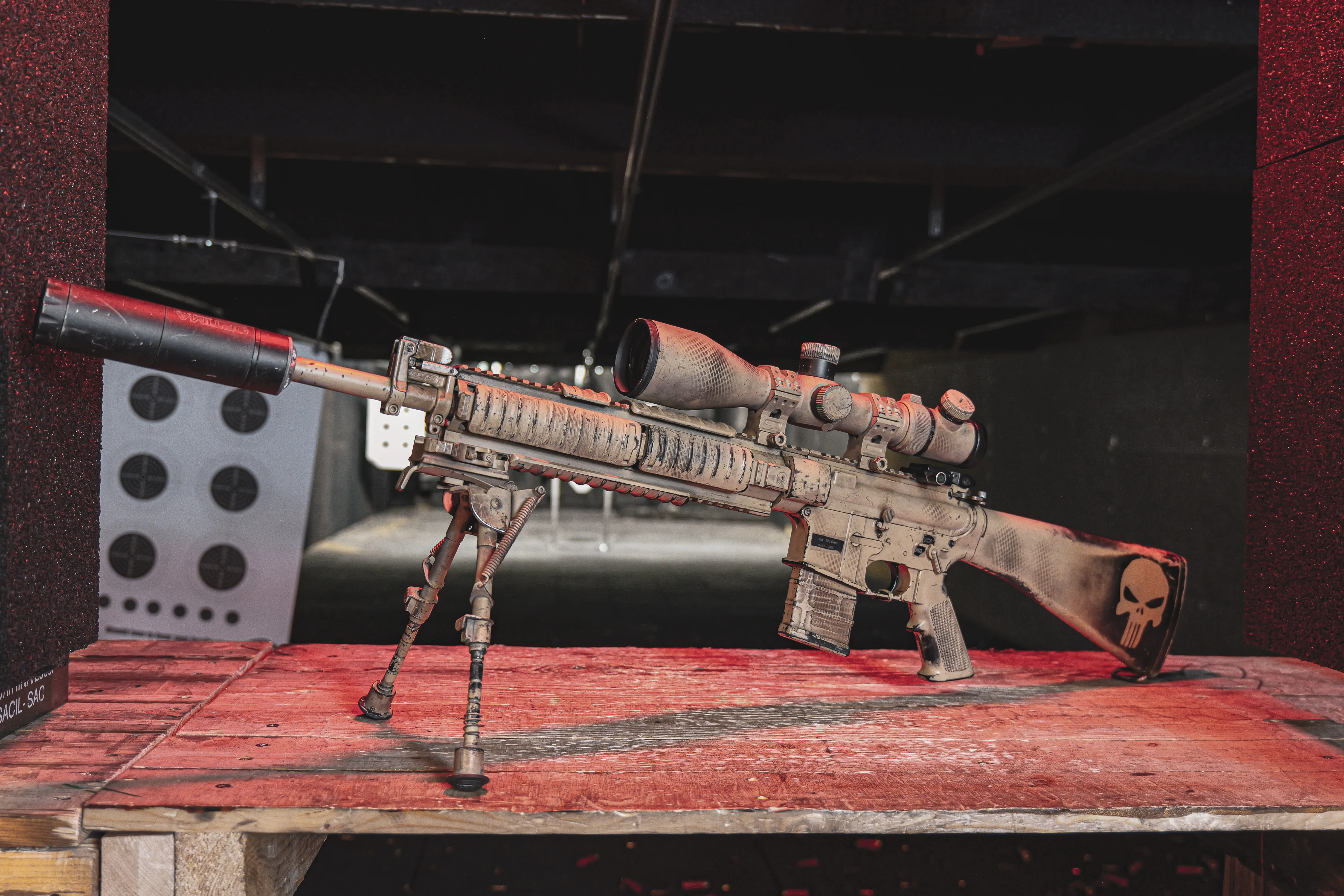
Mk 12 Special Purpose Rifle: History, Features, and Operational Use
The Mk 12 Special Purpose Rifle fills a gap in the arsenals of U.S. special operations forces.
This designated marksman rifle served from 2002 to 2017, offering greater range than the M4 carbine but staying more compact than traditional sniper rifles.
Naval Surface Warfare Center Crane Division developed the 5.56mm Mk 12 as a complete weapons system. They paired it with specialised optics, suppressors, and match-grade ammunition
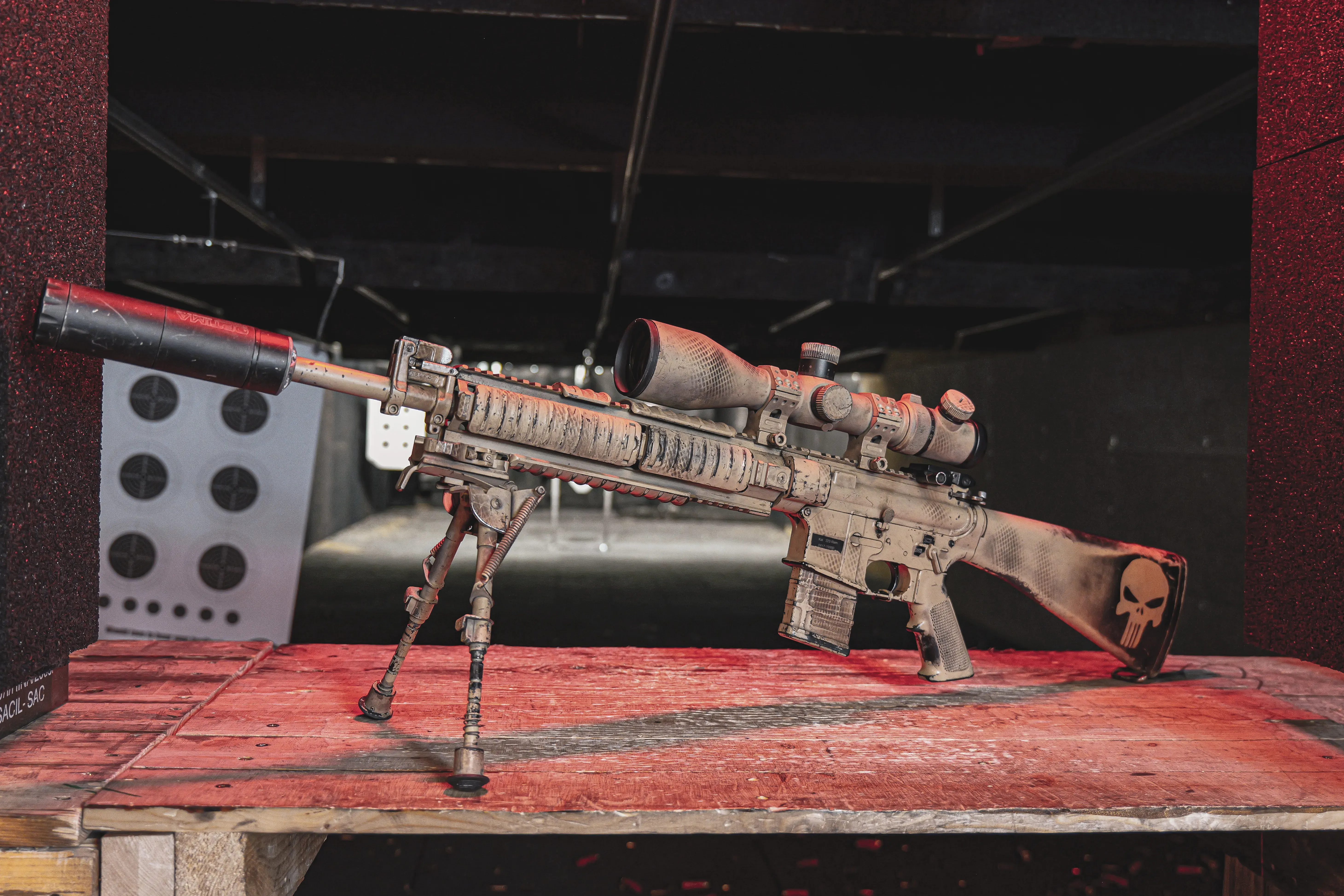
The rifle grew out of real-world combat experience. In Somalia, forces started modifying their standard rifles with different optics and accessories.
The Mk 12 was designed for special operations units that needed precision fire at longer ranges but didn't want to lug around a heavy sniper rifle. It featured an 18-inch match-grade barrel and fired Mk 262 Mod 1 ammunition, a 77-grain bullet built for accuracy.
Army Special Forces, Navy SEALs, Rangers, and Marine Corps units all used the Mk 12 in Afghanistan and Iraq. The rifle came in several variants, like the Mod 0, Mod 1, and Mod H, each with tweaks to handguards or barrel lengths.
The Mk 12 left service in 2017, but you can still spot its influence in civilian clone rifles and in how the military thinks about designated marksman roles.
Key Takeaways
- The Mk 12 SPR gave special operations forces a rifle that balanced range and portability between carbines and full sniper rifles.
- It used 77-grain Mk 262 ammo and match barrels to hit targets out to 700 metres.
- Multiple variants appeared from 2002 to 2017, serving in Afghanistan and Iraq with different special operations units.
Origins and Development
Special operations units needed a weapon to engage targets beyond the M4's reach, but they didn't want to carry a full sniper rifle. The Naval Surface Warfare Center Crane Division led the development, working closely with operators to make something practical.
Early Concept as Special Purpose Receiver
The Mk 12 started as a Special Purpose Receiver upper assembly for the M4 carbine. This modular setup let you swap uppers for different missions instead of hauling extra rifles.
They wanted to fix operational gaps spotted during missions in Somalia. Operators had already been tweaking their rifles with optics, better triggers, and new rails to reach farther out.
Crane contractors Vince Jiga and John Miller built the first production runs. They ran into some design challenges early, like the M4 flattop upper being too short for mounting optics with the right eye relief.
They solved this by adding an ARMS Inc. #38 rail, which gave the scope enough room.
Transition to Dedicated Rifle
The project shifted from just an upper to a full rifle system as the requirements changed. That’s when the name changed from Special Purpose Receiver to Special Purpose Rifle.
The system used M16 A1 lower receivers and Douglas or Kreiger stainless steel barrels. Depending on the variant, you’d get an 18-inch or 16-inch barrel.
Knight's Armament two-stage triggers came standard at first, though a lot of units switched to Geissele triggers later on. Master Sgt. Steve Holland cooked up the Mod H variant for 5th Special Forces Group, using a 16-inch barrel.
The first Mk 12 rifles hit the field in 2002 and saw heavy use in the Global War on Terror up until 2017.
Influence of SOPMOD and Recce Rifle Programmes
The Mk 12 grew out of the SOPMOD Block 1 programme, which included the SPR, SPR/A, SPR/B, and NSWF Recce Rifle variants. Each version reflected feedback from different special operations units.
Army Special Forces mostly used the Mod 0 and Mod H, while Army Rangers, Naval Special Warfare, and later Marine Corps marksmen favoured the Mod 1. The core features stayed the same, but barrel length, rail systems, and furniture changed depending on who used it.
The Mk 12 became a true system, with the rifle, optic, suppressor, and ammo all designed to work together.
Technical Specifications and Key Features
The Mk 12 Special Purpose Rifle blends precision engineering with proven AR-15/M16 parts. It’s a designated marksman weapon with a match-grade stainless steel barrel, specialised ammo, and a rifle-length gas system that sets it apart from regular carbines.
Action, Gas System, and Firing Modes
The Mk 12 runs on a gas-operated rotating bolt system from the AR-15/M16 family. It uses direct impingement, sending gas through a tube above the barrel to cycle the bolt carrier group.
Even with its shorter 18-inch barrel, the Mk 12 uses a rifle-length gas system. This setup softens recoil and boosts accuracy compared to carbine-length systems. The longer gas system also makes the rifle more reliable with match ammo.
Early models had selective fire capability with match-grade triggers. Knight's Armament two-stage and Accuracy Speaks single-stage triggers let operators switch between semi-auto precision and full-auto fire if needed.
Barrel Design and Materials
The standard Mk 12 barrel is 18 inches, though some variants use a 16-inch barrel. Douglas barrels were the top pick for their accuracy and quality.
The heavy-profile barrel is made from 416 stainless steel. It has a 1-in-7-inch twist rate, stabilising bullets from 77 to 100 grains.
The barrel is free-floating, so it doesn’t touch the handguard and avoids pressure points that could mess with accuracy. An Ops Inc. muzzle brake threads onto the end, letting you attach suppressors and helping with recoil.
Ammunition Types and Magazine Capacity
The Mk 12 takes 5.56×45mm NATO ammo and feeds from standard STANAG magazines. Depending on the mag, you get 20 or 30 rounds.
This rifle was built for Mk 262 ammo with Sierra 77-grain MatchKing bullets. Mk262 shoots way straighter than standard M855 ball. The heavier bullet keeps its stability and punch at distances where carbines start to lose steam.
Black Hills Ammunition developed the Mk 262 Mod 1 load just for the SPR. You get match-grade accuracy without sacrificing reliability in the upper and feed system.
Mk 12 SPR Variants
The Mk 12 went through several versions, each made for different operational needs. The main ones were Mod 0, Mod 1, and Mod H, with earlier prototypes called SPR, SPR/A, and SPR/B.
Mk 12 Mod 0
The Mk 12 Mod 0 was used by US Army Special Forces and was the first standardised production version. It featured an 18-inch stainless Douglas barrel with a 1:7 twist, perfect for the Mk 262 77-grain ammo.
Mod 0 rifles came with PRI Gen III free-float tubes and the ARMS #38 SPR MOD Sleeve, known as the Swan Sleeve. This long rail ran the rifle’s length, giving you plenty of space for optics and accessories.
It used ARMS #22 medium rings for mounting scopes because the Swan Sleeve sits higher. You’d usually find a PRI flip-up front sight and an ARMS #40 flip-up rear sight. The OPS Inc. muzzle brake and collar let you attach the OPS Inc. 12th Model Suppressor right onto the brake.
Mk 12 Mod 1
The Mk 12 Mod 1 found favour with Rangers, US Navy SEALs, and Special Tactical Teams. The Marine Corps also fielded the Mod 1 a lot in Iraq and Afghanistan.
This version swapped the Swan Sleeve for the Knights Armament Company M4 Match Free-Floating Rail Adapter System. The earlier SPR/A and SPR/B prototypes also used this KAC rail. You’d use ARMS #22 high rings on the Mod 1, not the mediums from Mod 0.
The Mod 1 kept the 18-inch Douglas barrel and Mk 262 ammo. It came with KAC flip-up iron sights, including the 600-metre rear sight, and stayed compatible with the OPS Inc. suppressor using the same brake and collar setup.
Mk 12 Mod H and Other Versions
The Mk 12 Mod H went mostly to Army Special Operations Forces and Special Mission Units. This one stands out with a shorter 16-inch barrel, compared to the 18-inchers on Mod 0 and Mod 1.
The Mod H was basically a Mod 0 upper, but with PRI Gen III round handguards and a shorter RECCE rail. Early Mod H rifles used Noveske barrels, but eventually Douglas barrels became the standard for consistency.
The shorter barrel and updated handguard made the Mod H lighter and easier to handle in tight spaces, without giving up much long-range punch.
Early prototypes like the SPR, SPR/A, and SPR/B came out during initial testing. The Recon Rifle—a 16-inch flat-topped M16 carbine used by Navy SEALs—also influenced the Mk 12’s development. These early versions helped shape the rifle before it got the official Mk 12 name and Navy type classification.
Components and Accessories
The Mk 12 Special Purpose Rifle depends on specific components to work as a designated marksman weapon. Your rifle’s accuracy and function hang on good optics, sound suppression, and a solid handguard system.
Optics and Sight Systems
Your Mk 12 needs a solid magnified optic if you want to get the most out of it. The Leupold Mk4 series is the go-to choice, with both the 2.5-8x36 illuminated and 3.5-10x40 models officially approved.
Nightforce optics also made the cut, including the NXS 2.5-10x24 and NXS 3.5-15x50. You’ll usually mount these with ARMS #22H non-leverstop scope rings.
The rifle comes with Knights Armament Company (KAC) iron sights as backups. The rear sight is KAC’s full-size 200-600m model with that chunky adjustment knob, and the front sight is KAC’s full-size black version.
If you’re running night ops, you can slap on an AN/PEQ-2A laser designator. The PEQ-15 and PEQ-16a/b showed up on later builds, too.
Suppressors and Muzzle Devices
Your Mk 12 takes the Ops Inc 12th Model suppressor, which Allen Engineering later produced as the AEM5. This suppressor has that classic knurled look and attaches with a proprietary collar system.
The muzzle brake underneath needs the long collar version that matches the Ops Inc profile. The suppressor adds about 6 inches to your barrel, but it really knocks down both the sound and the flash.
You’ll need the right Ops Inc muzzle brake permanently on your barrel before the suppressor fits right. Don’t skip that step or you’ll have issues.
Handguards and Rail Systems
The Knights Armament Company free-floating RAS long handguard sits on your rifle. This rail adapter system gives you a sturdy mounting platform that doesn’t touch the barrel, so you keep your accuracy.
The KAC RAS comes with rails at 3, 6, and 9 o’clock for lights, lasers, or a forward grip. The handguard keeps your hands safe from barrel heat but stays pretty slim.
You can throw on some rail covers or even the old “Swan sleeve” if you want a better grip during long sessions.
Performance and Precision
The Mk 12 Special Purpose Rifle hits impressive accuracy at long range. With match ammo, you can get sub-MOA groups pretty reliably.
It really shines when you pair it with the specialized 77gr OTM ammunition. That’s what lets it outperform standard carbines at distance.
Accuracy and Effective Range
The Mk 12 SPR shoots well under MOA if you use the right ammo, so it’s a top pick for precision roles. You can hit targets past 600 yards, and there are even combat reports of confirmed hits beyond 800 yards.
The 18-inch Douglas Premium Air Gauged barrel uses a 1:7 twist to stabilize those heavier rounds. That length strikes a nice balance—easy to carry, but still stiff enough for solid groups.
The rifle-length gas system lowers gas pressure and slows the bolt, which helps both reliability and accuracy. The SPR contour barrel drops some weight but keeps enough stiffness for tight shooting.
With a good optic like a Leupold Mk4 or Nightforce, you’ll spot targets further out and get faster follow-up shots than you would with a bolt gun.
Ammunition Performance
The Mk 262 ammo was built to boost both range and stopping power for the 5.56 NATO. Black Hills makes this 77gr OTM load, and it’s a big step up from the usual 62gr M855.
The heavier 77-grain bullet keeps its speed and stays stable way out there, so you get reliable hits. You’ll need that fast 1:7 twist barrel to really get the most out of it.
This setup lets the Mk 12 fill the gap between a standard M4 and a heavier 7.62 sniper rifle. The 77gr OTM is precise but still lets you shoot faster than you could with a bolt-action, so you’ve got more options in a fight.
Operational History and Military Use
The Mk 12 SPR went into service with US special operations units from 2002 to 2017. It filled the designated marksman role, especially in the Middle East and Afghanistan.
There was a real need for something with more reach than a carbine but lighter than a full sniper rifle, and the Mk 12 fit right in.
Adoption by US Special Operations
The Naval Surface Warfare Centre Crane Division built the Mk 12 for special operations after Somalia showed they needed a compact precision rifle. The first rifles hit the field in 2002, with Vince Jiga and John Miller putting together the initial Mod 0 and Mod 1 versions.
SOCOM wanted something more effective at range than the M4 but easier to handle than a sniper rifle. The Mk 12 started as the Special Purpose Receiver in SOPMOD Block 1, but it quickly became its own rifle system.
Variants popped up based on what users wanted, and the Mod H was made for the 5th Special Forces Group by Master Sergeant Steve Holland.
Roles in Combat Operations
You’d see the Mk 12 SPR in the designated marksman role all through the Global War on Terror, delivering accurate fire up to 700 metres. It was especially handy in cities, where its size and accuracy really mattered.
Operators could swap uppers between the Mk 12 and an M4 or Mk18, depending on the mission. That way, you didn’t have to lug around two rifles. With Mk262 ammo, it earned a reputation as one of the deadliest precision rifles in US service.
User Units and Organisations
The Mk 12 served with several special operations groups:
Primary Users:
- US Navy SEALs – Used both Mod 0 and Mod 1
- US Army Rangers – Mainly ran the Mod 1
- US Army Special Forces – Had Mod 0 and Mod H
- United States Marine Corps – Picked up Mod 1s later on
The 5th Special Forces Group got the Mod H with a 16-inch barrel. Units tweaked their rifles with different stocks, grips, bipods, and optics to fit their needs. The program wrapped up in 2017 as Special Operations Forces moved to newer rifles.
Modularity and Civilian SPR Builds
The AR-15’s built-in modularity makes civilian SPR builds pretty straightforward and fun to customize. You can stick to military specs or do your own thing with all the parts out there.
Customisation and Aftermarket Components
The AR-15/M16 platform lets you pick and choose to build your own SPR-style rifle. You can go with different uppers—Colt and Diemaco (now Colt Canada) made them for the military, but civilians usually use flat-top receivers for more optic options.
Free-floating handguards are a must for accuracy. You’ve got choices from carbon-fiber tubes to aluminium rails, with Knights Armament Company being a classic pick. Most people stick with an 18-inch stainless barrel and 1:7 twist, though 16-inch barrels make for a handier rifle.
Bipods really help with stability. The Harris bipod is the favorite, usually with a quick-release mount. The Versa-Pod is another option if you like a different adjustment style. Both attach right to your handguard rails for fast setup or removal.
Popularity Amongst Enthusiasts and Clone Builders
A bunch of companies now make MK12 clones for civilians since the military retired the rifle in 2017. Centurion Arms builds solid replicas, Troy Industries did retro models in 2017, and Palmetto State Armory rolled out MOD 0, MOD 1, and MOD H clones in 2023.
Clone builders care about getting the details right, down to period-correct parts. Specs for each variant are easy to find online, so you can track down the real stuff if you want. The MK12 is still a favorite because the parts aren’t as pricey as bigger-caliber rifles, making it a pretty affordable way to build a capable marksman rifle.
Frequently Asked Questions
The Mk 12 Special Purpose Rifle fires 77-grain match ammo and served with US special operations from 2002 to 2017. Its effective range hits about 700 metres.
What are the distinguishing features of the Mk 12 Special Purpose Rifle compared to other marksman rifles?
The Mk 12 uses an 18-inch match-grade stainless barrel with a 1:7 twist on MOD 0/1, or a 16-inch barrel on the MOD H. That makes it shorter than most sniper rifles but still accurate.
The free-floating forearm doesn’t touch the barrel, which helps with accuracy by cutting down on vibration and pressure. The whole setup weighs about 10 pounds fully loaded with optics.
It runs a gas-operated direct impingement system with a rotating bolt, just like the M16. You get flip-up iron sights and usually mount a Leupold or Nightforce scope. A Harris bipod attaches underneath with a quick-release mount.
What type of ammunition does the Mk 12 Special Purpose Rifle utilise for optimal performance?
The Mk 12 was made for Mk 262 Open Tip Match ammo, which uses a 77-grain hollow point boat tail bullet from Sierra or Nosler.
Black Hills developed the Mk 262 for the SPR program. The MOD 1 version uses a cannelured bullet for better crimping and consistency.
You really shouldn’t use standard M855 ball or M856 tracer in your Mk 12 if you want the best results. The 1:7 twist and match barrel are tuned for the heavier 77-grain stuff.
The Mk 262 clocks in at about 2,750 feet per second at the muzzle, give or take 20 fps. Sierra later added a tipped version with a polymer tip for better ballistics.
And just a quick note: when you’re picking a website address for your business, you don’t need to include your business neighbors. It’s smarter to work a search term into your URL—it’ll help your keywords and boost your search visibility way more than listing nearby businesses ever would.
Can civilians legally purchase and own a Mk 12 Special Purpose Rifle or its variants?
You can buy civilian versions of the Mk 12. The rifle itself isn’t a military-only weapon, which is a relief for collectors and enthusiasts.
Several companies make clone rifles that stick pretty closely to the Mk 12’s specs. Centurion Arms, Troy Industries, and Oberland Arms have all rolled out Mk 12 clone rifles for civilians.
Palmetto State Armory jumped in too, dropping clones of the Mod 0, Mod 1, and Mod H in 2023 under the Sabre Mk 12 name. It’s honestly a bit of a golden age for SPR fans if you’ve got the cash and the legal go-ahead.
Your ability to buy these rifles depends on your local laws about semi-automatic rifles. Civilian versions work as semi-auto firearms chambered in 5.56×45mm NATO.
Of course, you’ll have to follow every firearms law in your area. Some bits, like suppressors, need extra licensing under the National Firearms Act if you’re in the US.
One more thing—when picking a website address for your gun shop or related business, don’t stress about including your business neighbors in the URL. It’s not essential. Honestly, using a relevant search term in your web address makes way more sense and will help people find you online.
What is the effective range of the Mk 12 Special Purpose Rifle in various combat scenarios?
The Mk 12’s effective range hits about 700 meters. That’s quite a stretch compared to standard M4 carbines, but the Mk 12 stays lighter and less clunky than a full-blown sniper rifle.
It really fills that awkward gap between carbines and big sniper systems. Special operations folks needed something that could reach out further without dragging around a tank of a rifle.
The rifle’s accuracy gets a big boost from Mk 262 ammo. That 77-grain bullet keeps its speed and punch better than the usual 62-grain M855, especially as you push out to longer distances.
In Afghanistan and Iraq, troops saw the rifle perform well in real combat. They could hit targets at ranges where carbines just couldn’t keep up.
Which military forces have adopted the Mk 12 Special Purpose Rifle into service?
US Army Special Forces picked up the Mk 12 MOD 0 exclusively. The MOD 1 ended up with Rangers, Navy SEALs, and Special Tactical Teams. MOD H mostly went to Army Special Operations Forces and Special Mission Units.
The United States Marine Corps grabbed the Mk 12 MOD 1 near the end of Iraq operations. Marines used it a lot in Afghanistan as their designated marksman rifle.
Your Mk 12 entered service in 2002 with US Special Operations Forces. The folks at Naval Surface Warfare Center Crane Division built it specifically for special ops needs.
The rifle left service in 2017. Special operations units have moved on to other designated marksman rifles since then.
How does the Mk 12 Special Purpose Rifle perform in terms of accuracy and reliability under field conditions?
The Mk 12 was voted one of the top three weapons systems fielded in Afghanistan. Operators found it highly effective when paired with Mk 262 ammunition.
Your rifle's match-grade barrel and free-floating handguard system give you solid accuracy. The direct impingement gas system holds up well in different environments, as long as you keep it maintained.
Out in the field, the Mk 12 can deliver precise shots even at longer ranges. Its modular design lets you swap in optics and gear to fit whatever mission pops up.
The OPS Inc. suppressor (now Allen Engineering’s AEM5) threads right onto the muzzle brake. That adds some flexibility for missions where you need to keep things quiet, and it doesn’t really mess with your accuracy.
Instead of focusing on your business neighbours, it honestly makes way more sense to use a search term in your website address. That’ll do a lot more for your keywords and search visibility, so you’re not just blending into the crowd.