Shooting Range Safety Rules: Essential Guidelines Every Shooter Must Know
Whether you're a first-time visitor or an experienced shooter, these essential shooting range safety rules will help keep you and others safe at all times.
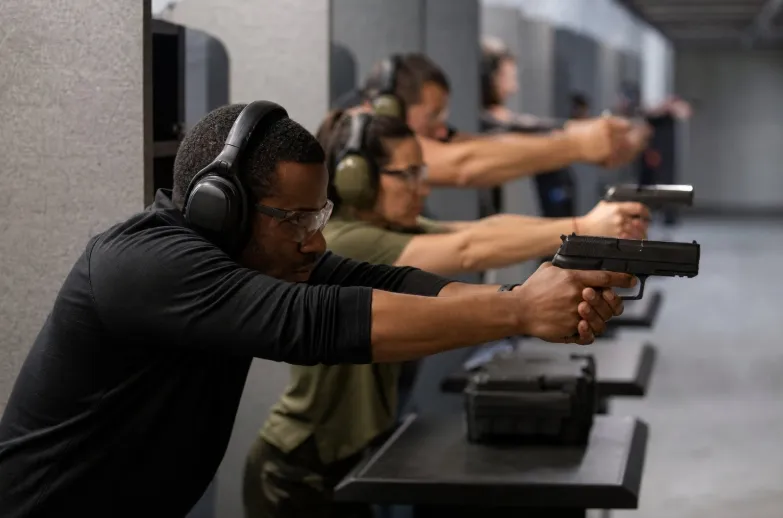
Shooting Range Safety Rules You Must Follow: Essential Practices for Responsible Firearm Use
Walking into a shooting range for the first time can feel overwhelming. The loud gunfire, unfamiliar equipment, and strict protocols might make anyone a bit nervous.
But understanding basic range safety protocols turns anxiety into confidence and helps everyone stay protected.
The seven essential shooting range safety rules you must follow include keeping your muzzle pointed in a safe direction, responding immediately to cease fire commands, wearing proper eye and ear protection, maintaining trigger discipline, transporting firearms unloaded with actions open, verifying no one is downrange before handling weapons, and never handling firearms during cold range periods. These basic protocols protect you and everyone around you from accidents that really don't need to happen.
Whether you're a beginner or returning after a long break, following these rules isn't optional. Each one exists for a reason—usually because someone learned the hard way what happens when it’s ignored.
Key Takeaways
- Keep your firearm pointed in a safe direction and your finger off the trigger until you're ready to shoot
- Wear eye and ear protection at all times, and respond instantly to range officer commands
- Don't handle firearms when someone is downrange or during a cold range status
Core Principles of Firearm Safety
Anyone picking up a firearm needs to master four core principles that prevent accidents and literally save lives. These rules overlap, creating a safety net—if one fails, another still stands between you and disaster.
Treating Every Firearm as Loaded
You should treat every firearm as if it’s loaded, no matter what anyone says or how sure you feel. This mindset wipes out complacency and keeps you from skipping critical safety steps.
If someone hands you a firearm, open the action right away and look inside the chamber and magazine yourself. Don’t just take their word for it—checking should become second nature every single time.
Even during dry fire practice with an unloaded gun, stick to the same safety habits. The moment you assume a firearm is safe without checking, you open the door to accidents. Proper firearm handling really does start with this constant vigilance.
Muzzle Control and Safe Direction
Always keep your muzzle pointed somewhere an accidental discharge can’t hurt anyone. This rule matters most—if you mess up everything else, this one still prevents tragedy.
What counts as a safe direction changes depending on where you are. At an indoor range, that means downrange toward the backstop. Outdoors, up or down might be safer, depending on what’s around.
Stay aware of your muzzle at all times: loading, unloading, moving, even if you stumble. Don’t point a gun at anything you don’t want to destroy, including yourself. Bullets can go through walls, floors, and ceilings, so think about what’s beyond those barriers, too.
Trigger Discipline Fundamentals
Keep your finger completely outside the trigger guard and along the frame until you’ve decided to fire. That simple habit stops accidental discharges from surprises, slips, or just plain nerves.
Index your trigger finger along the slide or frame, always in the same spot. Many shooting range protocols emphasize this, since new shooters often forget.
Don’t touch the trigger when loading or unloading. Never rely on the mechanical safety to keep you safe—safeties can fail or get left off. Your trigger discipline is the final line of defense.
Understanding Your Firearm
You can't handle a firearm safely if you don't understand how it works. Each firearm has its own quirks—loading, safety features, handling—they’re all different.
Read the manual for your specific model before you ever fire it. Figure out how to load and unload, where the safety is, and how it works. Some handguns want the hammer down on an empty chamber; others, not so much.
Know your firearm’s calibre and only use ammo that matches exactly what’s marked on the barrel. Learn how to clear malfunctions safely and recognize when it’s time to call a gunsmith. Don’t mess with the mechanical systems—modifications can cause dangerous malfunctions and void your warranty, too.
Personal Protective Equipment Requirements
Shooting ranges require specific protective gear to keep your hearing and eyesight intact. Eye and ear protection with proper safety ratings are mandatory—no exceptions, no entry without them.
Mandatory Eye and Ear Protection
Your eyes need protection that meets ANSI Z87.1+ or MIL-PRF-32432 standards to block ricochets, hot casings, and powder blowback. Regular glasses just don’t cut it. Wear wraparound ballistic eyewear that covers your peripheral vision and doesn’t fog up indoors.
Gunfire easily hits 140 decibels and up, which can cause instant, permanent hearing loss. You need hearing protection with a Noise Reduction Rating (NRR) of at least 25. Indoor ranges often want you to double up—earplugs and earmuffs—because the sound bounces around and gets even louder.
Most shooting facilities enforce eye and ear protection before you even step up to the line. Make sure your gear fits right and stays on the whole time you’re in the range area.
Choosing Between Earmuffs and Earplugs
Earmuffs give you steady coverage and are simple to put on correctly—great for outdoor ranges where sound spreads out more. Electronic earmuffs let you hear range commands while still blocking gunfire noise.
Earplugs (foam or silicone) are portable and work well if you insert them properly. They need an NRR of 25 or higher, but honestly, a lot of folks don’t get a perfect seal with plugs alone.
For indoor ranges, dual protection—earmuffs over earplugs—works best. That combo gives you the most noise reduction when things get really loud.
Range Commands and Communication
Range commands create structure and keep everyone safe during shooting. Range officers use these verbal instructions to tell you when it’s okay to handle firearms, shoot, or move around.
Essential Range Commands
The range safety officer (RSO) calls out specific commands to control the flow. When you hear "Load," you can insert ammo while on the firing line. "Commence firing" means you’re clear to start shooting whenever you’re ready.
Understanding range commands is critical to gun safety because they sync up everyone’s actions. Listen closely and follow each instruction right away. Different ranges might use slightly different words, so don’t be shy—ask if you’re not sure.
If your firearm jams or malfunctions, keep it pointed downrange and raise your non-shooting hand to get the RSO’s attention. Don’t try to fix it yourself unless you’ve checked in with range staff first.
Cease Fire Procedures
"Cease fire" means stop shooting right now—even if you’re about to pull the trigger. Take your finger off the trigger, keep the muzzle pointed safely, and wait for the next instructions.
This command comes up in normal operations and emergencies. Anyone can call "cease fire" if something looks unsafe—don’t wait for the RSO to catch it.
After a cease fire is called, don’t handle firearms until the RSO says it’s okay. Never touch your gun when people are downrange changing targets.
Unload and Show Clear
"Unload and show clear" means you need to remove all ammo and prove the chamber’s empty. Open the action, drop the magazine, and check for rounds inside.
The RSO or another shooter may want to see that your firearm is clear before moving on. This command usually comes before people head downrange to check or swap targets.
Keep your action open and the muzzle pointed safely after unloading. Don’t close the action or pick up your gun again until the RSO gives the green light.
Understanding 'Range Is Hot'
"Range is hot" means live fire is happening or about to happen. Don’t go downrange for any reason, and keep all firearms pointed toward the targets.
Only "cease fire" can interrupt "range is hot." Once shooting starts, the RSO stays in control until all guns are down. Don’t cross the line, grab dropped items, or mess with targets while the range is hot.
Conduct on the Firing Line
Your behavior at the firing line is what really keeps everyone safe. Load carefully, act respectfully, and follow strict firearm handling rules—those habits make all the difference for you and everyone else there.
Loading and Unloading Safely
Only load your firearm when you're at the firing line and the range is hot. Always keep your muzzle pointed downrange while loading.
Remove the magazine first. Check the chamber both visually and with your finger to make sure it's empty.
Don't load until you're genuinely ready to shoot. As soon as you're done shooting, unload right away—magazine out, chamber cleared, action locked open so everyone sees it's safe.
Say "loading" before you insert ammo so folks nearby know what's up. Store your ammo away from your firearm when you're not shooting.
Before stepping away from the firing line, verify—action open, firearm totally unloaded. It's just good habit, honestly. More on proper firearm handling at the range here.
Firing Line Etiquette
Keep a respectful distance—usually 1.5 to 2.5 metres—from other shooters. Conversation should stay minimal and quiet; don't distract someone who's aiming or firing.
Collect your spent brass in your own area instead of letting it scatter everywhere. If the firing line's full, just wait your turn—no need to crowd.
Listen to range officers' commands and follow them right away, no debate. Stay behind the firing line unless told otherwise.
Keep your station tidy and dispose of targets properly when you're finished. It keeps things running smoothly for everyone.
Handling Firearms When Others Are Downrange
Never touch a firearm when people are downrange checking targets. Place your firearm on the bench, action open, magazine out.
Step back from the firing line so it's clear you're not handling any weapons. Wait for the "cease fire" command before anyone goes forward.
During a cold range, keep all firearms unloaded and benched. Don't touch anyone else's firearm—even if it looks unloaded, just don't.
Knowing hot and cold range protocols helps prevent accidents when people are downrange. Only handle your firearm again after everyone returns and "range is hot" is called.
Safe Handling of Ammunition
Proper ammo handling keeps malfunctions and mishaps at bay. Use the right ammunition for your firearm and store it correctly—it's not really negotiable if you care about safety.
Appropriate Ammunition Selection
Double-check that your ammo matches what's stamped on your gun's barrel and in the manual. Using the wrong calibre or gauge can ruin your firearm and seriously hurt someone.
Look at every cartridge as you load. Even one wrong round can wreck your gun in a flash.
Never use damaged, corroded, or sketchy-looking ammunition, no matter how much you think you're saving. If it's been wet or submerged, toss it—don't gamble with bad rounds.
Don't spray oil or solvents on ammo; it can cause misfires or dangerous pressure spikes. Just not worth it.
Handloaded or reloaded ammo is a whole different ballgame. Stick to rounds made by trusted hands, following published specs and safe pressure standards.
Ammo made from mystery components or outside the guidelines? That's just asking for trouble. Always inspect each cartridge before you chamber it.
Your gun was built and tested for factory ammo specs. Straying from that just adds risk you don't need.
Storage and Transport of Ammunition
Keep ammo locked up and away from firearms, somewhere kids and unauthorized adults can't get to it. Firearms stay unloaded when not in use, and ammo goes in a separate locked box.
Transport ammo in closed cases, separate from your gun. Guns should be unloaded, action open, when you're heading to or from the range.
Store ammo in a cool, dry place—heat and moisture just mess with reliability over time. It's easy to overlook, but it matters.
Understanding and Following Range Rules
Every range has its own safety protocols, enforced by trained staff. Your job? Just follow the rules—it's about keeping everyone safe, not just you.
Range Safety Officer Roles and Responsibilities
Range Safety Officers (RSOs) run the show, making sure everything stays safe. They're always watching, enforcing rules, and ready to step in if something's off.
RSOs call out commands like "Cease Fire" or "Range is Cold," and you need to respond right away. They watch shooter behavior, check firearms when needed, and make sure everyone keeps their muzzle pointed safely.
If an RSO talks to you or gives instructions, just do what they say—no arguing. They can kick out anyone breaking the rules or creating danger.
RSOs also run safety briefings, answer questions, and help new shooters get comfortable with the range's procedures.
Complying With Specific Shooting Range Rules
Every facility has its own range rules beyond the basics. Get familiar with these specific requirements before you start handling firearms.
Common facility-specific rules might include:
- Which calibres and ammo types are allowed
- Approved and banned target materials
- Limits on how fast you can fire
- Required shooting positions—standing, bench rest, prone, etc.
- Firearms or mods that aren't allowed
- Brass collection rules
Indoor and outdoor ranges can have pretty different rules. Indoors, rifle calibres might be restricted; outdoors, there could be limits on hours or special backstop rules.
Some places ban rapid fire, while others have a spot just for it. Follow posted signs, attend safety briefings, and if a rule's unclear, just ask—better safe than sorry.
Paying attention to range instructions helps you avoid mistakes that could get you kicked out.
Reporting Safety Concerns
If you spot unsafe behavior or conditions at the range, it's on you to report it. Don't try to correct other shooters yourself—just let an RSO know right away.
Let them know immediately if you see:
- Firearms pointed in unsafe directions
- People handling guns during cold range periods
- Damaged targets or backstops
- Equipment malfunctions
- Shooters ignoring RSO commands
When you report something, give details—what happened, where, who was involved. RSOs need the facts to fix things fast.
Don't confront anyone directly about safety violations. It's just not worth the risk or the argument.
Staying alert helps keep the environment safe for everyone. Range safety works best when everyone looks out for each other and speaks up if something seems off.
Frequently Asked Questions
Shooters usually have a bunch of questions about safety rules, gear, and what to do if a firearm malfunctions. Getting these basics down helps keep you and everyone else at the range safe—and honestly, it makes the whole experience better.
What are the basic safety rules to follow at a shooting range?
Always keep your firearm pointed downrange, even if it's unloaded. Keep your finger off the trigger until you're set to shoot at your target.
Know your target and what's behind it before firing. Only shoot at authorized targets—never at anything you haven't identified.
Keep your firearm unloaded until you're at the firing line and ready to use it. Most ranges want you to carry firearms in cases until you're at your spot.
What are the four golden rules of gun safety and how do they apply on the range?
The four golden rules are the backbone of range safety. Always treat every firearm as loaded, even if you've just checked it.
Keep the muzzle pointed in a safe direction—at the range, that means downrange at the backstop. Don't let the barrel sweep anyone else or anywhere behind the line.
Keep your finger off the trigger until your sights are on target and you're ready to fire. Always control your muzzle, whether loading, unloading, or dealing with a malfunction.
What should you do when a ceasefire is called at the firing line?
If someone calls "cease fire," whether it's an RSO or another shooter, stop firing immediately. Take your finger off the trigger right away.
Point your firearm downrange while you unload it. Open the action, remove the magazine, and check the chamber to be sure it's empty.
Step back from the line and wait for the RSO's next instructions. Never touch any firearms while people are downrange—even if your gun's unloaded, just don't.
How should firearms be carried, cased, and handled when moving around the range?
Bring all firearms to and from the range in a proper case. Keep them unloaded for transport, and only uncase them at the firing line or in the prep area.
When moving around the range, point your firearm in a safe direction with the action open. Many places want you to use a chamber flag or bore indicator to show it's unloaded.
Don't handle firearms behind the firing line unless you're in a designated area. If you need to leave the line, unload your gun, open the action, and let the RSO know what you're doing.
What protective equipment is required at a shooting range, and when must it be worn?
Wear eye protection at all times on the firing line or anywhere shooting happens. Safety glasses keep your eyes safe from brass, debris, and ricochets.
Hearing protection's a must for everyone—shooters, observers, whoever. Use foam earplugs, earmuffs, or both if you want extra protection.
Put on safety gear before you get to the firing line and keep it on until all shooting stops. Some ranges recommend closed-toe shoes and long sleeves to protect against hot brass—honestly, not a bad idea.
What are the correct procedures for dealing with a misfire, hang fire, or squib round on the range?
If you pull the trigger and the gun doesn’t fire, keep it pointed downrange for at least 30 seconds. That waiting period helps protect you in case of a hang fire—a delayed ignition that could catch you off guard.
After those 30 seconds, keep the muzzle in a safe direction while you carefully unload the firearm. Take a close look at the ammunition as you remove it.
If you’re unsure what to do next, or you feel stuck, flag down a range safety officer. It’s always better to ask than to guess when safety’s on the line.
A squib round usually sounds much quieter than normal and gives you less recoil. If you suspect a squib, stop shooting right away—the bullet might be stuck in the barrel.
Never fire another round after a squib. That’s a recipe for disaster and could seriously injure you or others.