The SA80 British Rifle: Comprehensive Guide to History, Variants, and Replacement
From early criticism to battlefield service, explore the full story of the SA80 — its development, upgrades, variants, and the future of Britain’s service rifle.
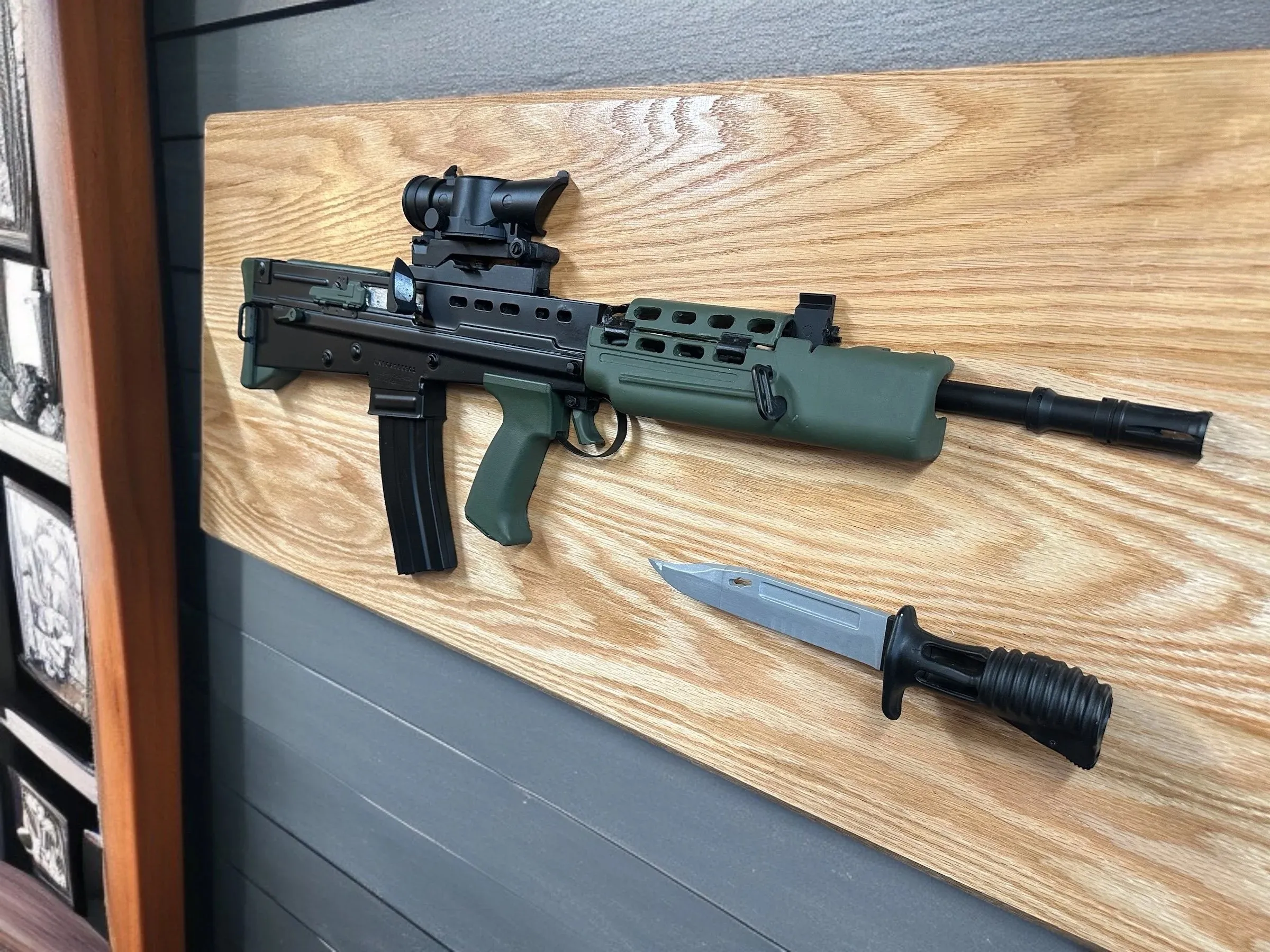
The SA80 British Rifle: Comprehensive Guide to History, Variants, and Replacement
The SA80 is a British family of 5.56×45mm NATO service weapons that’s been the standard rifle for the British Armed Forces since 1987. The L85 rifle variant replaced the L1A1 Self-Loading Rifle and is still in service, though the British Army wants to retire it by 2030 under Project Grayburn.
This bullpup-configured weapon system came out of the Royal Small Arms Factory in Enfield during the 1970s and 1980s. Production kicked off in 1985.
The SA80 has had a pretty rocky history, especially in its early years—lots of reliability issues dogged it from the start. After that rough intro, Heckler & Koch came in with a major upgrade in the early 2000s and rolled out the A2 variant, which fixed a lot of headaches.
The A3 version followed in 2018 and brought more tweaks, turning the SA80 into what many now call a reliable service weapon.
From its early days as a 4.85mm experimental rifle to its current place as one of NATO's most accurate small arms, the SA80 really shows both the struggles and wins of British firearms engineering.
Key Takeaways
- The SA80 has been the British Army’s standard rifle since 1987, and the A2/A3 upgrades made it much more reliable after a rough start
- It uses a bullpup design, so you get a shorter overall length but keep a full-length barrel, chambered in 5.56×45mm NATO
- The British Army plans to replace the SA80 by 2030 through Project Grayburn, aiming for 150,000-180,000 new rifles
Origins and Development of the SA80
The SA80 came about because Britain needed to swap out its old 7.62mm rifles for something more modern in 5.56mm during the 1970s. Development really started in the late 1960s when the Army wanted something to eventually take over from the L1 SLR in the 1980s.
Concept and Early Design
The Royal Small Arms Factory at Enfield Lock led the design work for what would become the SA80. When NATO announced trials in 1977 to pick a new cartridge, Enfield came up with an experimental 4.85×49mm round based on the US .223/5.56mm case, just necked down to 4.85mm.
The first version, called XL65, had a bullpup setup kind of like the old Enfield EM-2. But inside, the mechanism was closer to the Armalite AR-18, reworked into a bullpup stock and chambered for the 4.85mm round.
After NATO picked the Belgian SS-109 5.56mm cartridge, Enfield’s engineers rechambered the XL65 for that ammo. They kept working on it as the XL70. The first prototypes showed up in 1976, and they kept tweaking the bullpup design from there.
Adoption and Service Entry
The Falklands War delayed things, so the SA80 system didn’t get adopted until 1984. Production of the L85A1 kicked off in 1985, and the Ministry of Defence ordered about 320,000 rifles for British forces.
The SA80 was so accurate when it came in that Army marksmanship tests actually had to be redesigned. The family included the L85 assault rifle, L86 Light Support Weapon, and later the L22 carbine for special roles.
Original SA80s gave troops a lot of trouble—reliability issues, stuff breaking, you name it. Years of complaints led the UK MOD to order an upgrade in 1997. Between 2000 and 2002, about 200,000 rifles got the L85A2 upgrade.
Manufacturing and Industrial Partners
The SA80 ended up being the last weapon made at the Royal Small Arms Factory at Enfield Lock before it shut down in 1988. That closure was the end of a long, storied run of British weapons from that place, including the famous Lee-Enfield family.
Heckler & Koch, then owned by British Royal Ordnance, handled the upgrade program. BAE Systems also got involved later to support the weapon for British troops. German investors bought HK back in 2002, but by then, most of the upgrade work was already done.
Design Features and Technical Specifications
The SA80 has a bunch of unique design quirks—mainly its compact bullpup layout and gas-operated firing system. It fires 5.56×45mm NATO rounds and supports several optical sights for different combat situations.
Bullpup Configuration Advantages
The bullpup design puts the action and magazine behind the trigger group instead of in front. That lets the SA80 keep a full-length 518mm barrel but only measures 785mm overall.
You get better maneuverability in tight spaces, but still keep solid ballistic performance. The bullpup setup also shifts the weight back, so it sits snug against your shoulder when you fire.
But it’s not all perfect—the ejection port is right by your face, which isn’t great for lefties. You also have to watch your support hand near the short forend so you don’t get too close to the muzzle.
Gas Operation and Mechanisms
The L85 uses a gas-operated system with a rotating bolt. When you pull the trigger, expanding gas moves through a port in the barrel and pushes a piston that cycles the bolt carrier.
It’s a short-stroke gas piston setup, with the bolt carrier riding on two guide rods with return springs. This gives you a rate of fire of 775 rounds per minute if you switch to automatic.
The charging handle sits on the right side of the receiver, so you reach over with your support hand to work it. You can flip between semi-auto and full-auto, depending on what you need at the moment.
Optics and Sighting Systems
The standard SA80A2 comes with the SUSAT optical sight, which gives you 4x magnification for better target pickup at range. The SUSAT uses tritium, so you can see the reticle in low light.
If your main optic gets busted, you’ve got backup iron sights. Modern versions have Picatinny rails so you can swap in different optics like ACOGs or other advanced sights.
Those rails let you add whatever accessories you need for the mission. In urban fighting, that flexibility is honestly a game-changer.
Ammunition and Magazine Details
The SA80 takes 5.56mm (5.56×45mm NATO) rounds from a 30-round detachable box magazine. It spits them out at a muzzle velocity of 945 meters per second, so you can hit targets up to about 400 meters away.
Standard mags are made from steel and reinforced polymer now, which is way better than the old aluminum ones that weren’t as reliable. You can use regular STANAG magazines, and some units prefer Magpul EMAGs since they’re tougher.
The mag release is by the magazine well, but earlier models had issues with the catch snagging on gear and dropping the mag by accident.
SA80 Family and Variants
The SA80 family includes the L85 assault rifle, L86 light support weapon, and the L22 carbine. Each one was built for a specific job. There’s also the L98 cadet rifle, which is a manually-operated version for training.
L85 Rifle Series
The L85 has been the 43 Commando Fleet Protection Group boarding teams used the L22A2 since it's well-suited for cramped interiors aboard ships.
The L22A2 comes with a 12.5-inch barrel, which is a lot shorter than the standard rifle. This shorter barrel cuts down on accuracy and muzzle velocity, especially at longer distances.
A vertical grip helps with stable two-handed use, and small rails let you slap on lights or laser devices if needed.
L98 Cadet and Training Rifles
The L98 is a single-fire, manually-operated SA80 made for cadet forces. It skips the fully automatic mode, making it better for training younger shooters or those who don't need a full-on combat rifle.
The L98 fires the same L2A2 ball or L1A2 tracer rounds as other SA80 family members, so you still get the standard ammunition experience.
Operational History and Performance
The SA80 has served as the standard service rifle of the British Armed Forces since 1987. It's seen plenty of action across multiple theatres, and its journey has been a bumpy one—early headaches with reliability, then steady improvements after some big upgrades.
Deployment in British Armed Forces
The SA80A1 entered service in 1985 as the British Army's go-to individual weapon, replacing the L1A1 Self-Loading Rifle in all infantry and combat support roles. The bullpup layout gave it a full-length barrel in a compact frame, making it handy for vehicle crews and paratroopers alike.
By the late '90s, reliability problems pushed the Ministry of Defence to bring in Heckler & Koch for a major overhaul. Their A2 version took over as the main rifle from 2002, and the latest A3 variant arrived in 2018 with a better barrel, new furniture, and updated rails.
Combat Usage in Major Conflicts
The SA80 got put through its paces in Kosovo, Sierra Leone, Afghanistan, and Iraq. British forces leaned on it during urban fights and mountain battles, especially in Afghanistan. The A2 version held up better than the original, though desert dust still caused headaches at first.
In Iraq, the SA80A2 saw heavy use during the 2003 invasion and later counterinsurgency missions. Royal Marines and Army units relied on its compact size for close-quarters fights in Basra and other cities. The short length really made a difference when clearing buildings or working from vehicles.
Reliability, Accuracy, and User Feedback
Early SA80A1 rifles jammed up in desert conditions, had flimsy bits that broke too easily, and the magazine catch was way too touchy. Soldiers grumbled, and the press piled on, so the rifle's reputation took a real hit.
The A2 upgrade fixed a lot of these issues—over 50 changes in total. The rifle got so accurate that Army marksmanship tests had to be redesigned. Troops have been much happier with the A2 and A3, often praising the accuracy and handling.
Current barrels last over 30,000 rounds if you treat them right. The A3's chrome-lined barrel and better gas system have made the rifle even tougher for long, hard use.
Upgrades and Modernisations
The SA80 has come a long way since its rocky start. Heckler & Koch's upgrades turned it from a problem child into a weapon British troops could actually trust.
Transition from L85A1 to L85A2
The original L85A1 just didn't cut it—jams, broken parts, and poor performance in tough environments were all too common. If you were issued one, you probably weren't thrilled.
Heckler & Koch took the reins on the refurbishment in the early 2000s and overhauled the firing pin, extractor, and hammer assembly. They also sorted out the magazine catch and introduced a sturdier cocking handle.
The L85A2 came with a reworked gas system that finally made the rifle reliable. You could now trust it whether you were slogging through sand, snow, or jungle. The beefed-up bolt carrier and tougher internals meant stoppages dropped way down.
All these fixes cost about £92 million, but the payoff was worth it. The L85A2 performed well in Iraq and Afghanistan, and soldiers finally had some faith in their standard-issue rifle.
L85A3 and Mid-Life Improvements
The L85A3 is the latest and greatest in the SA80 lineup. You get a lighter weapon, better balance, and it just feels nicer in your hands.
This version sports a free-floating barrel, so accuracy at longer ranges is noticeably better. The trigger's been tweaked for a cleaner pull, and unnecessary parts got the boot to shave off some weight.
The new handguard includes a cooling system, keeping things from overheating during rapid fire. Accuracy doesn't drop off, even after you burn through a few mags in quick succession.
Accessory Integration and Modular Enhancements
Modern rails have totally changed how you can set up your L85A3. Picatinny sections let you mount all sorts of optics, including the trusty ACOG for medium ranges.
You can throw on:
- Day or night sights
- Laser designators
- Tactical lights
- Grip pods for extra stability
The UGL (underslung grenade launcher) gives you a 40mm punch without messing up your main rifle's balance. It just snaps on underneath—pretty slick.
The modular setup means you can tweak your rifle for whatever's coming up, whether it's close-quarters or you need to reach out a bit farther.
Replacement Programmes and Future of British Service Rifles
The British Army's planning to retire the SA80 by 2030, with Project Grayburn already rolling to find its replacement. This isn't just about picking a new rifle—it's about calibre choices, UK manufacturing, and keeping in step with NATO allies.
Project Grayburn and its Objectives
Project Grayburn aims to buy somewhere between 150,000 and 180,000 new rifles for British troops. The assessment kicked off in 2026, with contracts expected late 2026 or early 2027.
The Ministry of Defence is looking at four big factors. First, calibre—do you stick with 5.56mm NATO, or switch to something heavier like 6.8×51mm? Second, rifle layout—bullpup or the more classic style most NATO partners use? Third, the rifle's got to work with modern optics, suppressors, and future soldier gear. Fourth, domestic production matters for both guns and ammo, especially after recent supply chain scares.
The programme's still in its concept phase. Right now, they're figuring out what they actually need and talking to industry folks.
Contenders for Successor Rifle
Several companies have thrown their hats in the ring for Britain's next rifle. Beretta Defence Technologies has two: the New Assault Rifle Platform (NARP), which is a modular AR-style rifle, and the Sako M23, already in use with Finland and Sweden. Beretta says they'll build in the UK.
Heckler & Koch is offering the HK416 and HK433. The HK416 in 5.56mm NATO is already trusted by France, Norway, and the US Marines, while the HK433 is lighter and modular.
SIG Sauer's pitching the MCX series, including the MCX Spear (the US Army's new M7). The MCX handles multiple calibres, including 6.8×51mm, though it's a bit heavy at around nine pounds empty. Knight's Armament might offer the SR-16 and SR-25, but those are pricey and probably better for marksmen than regular infantry.
Calibre and Technical Trends
Calibre choice is a big deal for the British Army's new rifle. 5.56mm NATO makes life easier with allies and keeps logistics light, but officials want more punch than the SA80 delivers.
Other options include 6.5mm Creedmoor and 6.8×51mm SIG Fury. The US Army picked 6.8×51mm for its new rifles to beat modern body armour at range. It's got more stopping power, but you pay for it in heavier ammo and rifles.
Britain's not rushing like the US did with their Next Generation Squad Weapon programme. Instead, they're taking their time, focusing on NATO compatibility and making sure the industrial side lines up. It's a slower approach, but maybe that's not a bad thing—who wants to rush such a big decision?
Impact on British Defence and Industry
Project Grayburn will shape British defence way beyond just swapping out rifles. Calibre choice affects everything—ammo factories, logistics, even how troops fight in the 2030s. Going with 6.8×51mm would line up with the US, but you'd need new supply chains. Sticking with 5.56mm NATO keeps things simple with most allies.
Domestic production is a big deal, especially after recent supply chain scares. Beretta's promise to build in the UK helps, but other companies will have to prove they can do the same. The whole programme ties into the bigger land industrial strategy, making sure Britain can make its own weapons and ammo if it really has to.
Switching from bullpup to a conventional layout would make it easier to train alongside NATO partners. Better ergonomics and ambidextrous controls would also help British infantry fit in with coalition forces, which seems like a smart move.
Frequently Asked Questions
The SA80 rifle's changed a lot since the '80s. Big upgrades fixed early reliability headaches, and the A2 and A3 models are a whole different animal compared to the originals.
What are the key differences between the L85A1, L85A2 and L85A3 variants?
The L85A1 entered service in 1985 as the original version. It replaced the L1A1 SLR and used 5.56x45mm NATO ammunition with a 30-round magazine, but honestly, it struggled with reliability from the start.
The L85A2 showed up after a major upgrade programme led by Heckler & Koch in the early 2000s. They tackled the reliability problems head-on and improved the firing mechanism, bolt assembly, and gas system.
The L85A3 is the latest evolution in the lineup. It brings a new handguard, better ergonomics, and much-improved options for mounting modern optics and attachments.
Why did the early L85A1 develop such a poor reliability reputation?
The L85A1 quickly earned a reputation for poor reliability among British troops. Soldiers even called it the "civil servant," poking fun at its spotty performance in the field.
Manufacturing problems really dragged the rifle down. Shoddy materials and weak quality control meant parts would break or wear out far too soon.
It really didn't handle harsh environments well. Dust, sand, and dirt would jam up the works, which is the last thing you want in combat. The magazine catch was flimsy and sometimes let go without warning, and the firing pin could snap during normal use. Not great.
How did the A2 and A3 upgrade programmes improve performance and durability?
The A2 upgrade programme turned the rifle's reputation around. Heckler & Koch redesigned the firing pin, extractor, ejector, and hammer assembly, using tougher materials and better manufacturing.
They overhauled the gas system to cut down on fouling and boost reliability. The cocking handle got beefed up, and the magazine catch got a much-needed redesign, so it stopped dropping mags unexpectedly.
The A3 upgrade leaned more into modernisation. It introduced a free-floating barrel for better accuracy and added a new Picatinny rail system for optics and accessories. The handguard got lighter and more comfortable, which makes a difference during long operations.
How does the L85 compare with other NATO 5.56 mm service rifles in accuracy and handling?
The SA80 surprised many with its accuracy when it first appeared. The bullpup layout and rigid construction help it hit targets reliably at normal engagement ranges.
The L85A3 can hit area targets out to about 500-600 metres and point targets at 300-400 metres. That puts it right up there with, or even ahead of, more traditional rifles like the M4 or HK416.
But, the bullpup design brings its own quirks. It's great for vehicle crews and tight spaces thanks to its short length, but reloading feels slower than with conventional rifles. Left-handed shooters probably won't love it either, since the ejection port sits right near the face—awkward, to say the least.
Is there a legal civilian version available in the UK, and what are the main differences?
The L98 Cadet rifle acts as the civilian training version for British cadet organisations. It's built for training, not for general civilian use.
The L98 isn't just a copy of the military L85. It only fires in semi-auto, with no full-auto mode, and in some models, the gas system doesn't even work—so you have to manually cycle the action between shots.
If you're hoping to own a military-spec SA80 in the UK, you're out of luck. The Firearms Act bans civilians from having self-loading centrefire rifles, which covers all operational SA80 variants.
Do British soldiers routinely carry a pistol alongside their standard-issue rifle?
Most British soldiers don’t carry a pistol as standard kit. The L85 rifle is their go-to weapon, especially for infantry and most other roles.
Pistols usually go to specific people. Officers, vehicle crews, dog handlers, and certain specialists get sidearms since their work sometimes makes lugging a full-size rifle awkward or impossible.
The Glock 17 is the current standard pistol for the British Armed Forces, officially called the L131A1. It took over from the old Browning Hi-Power, which stuck around for a while before getting replaced for those who actually need a sidearm.